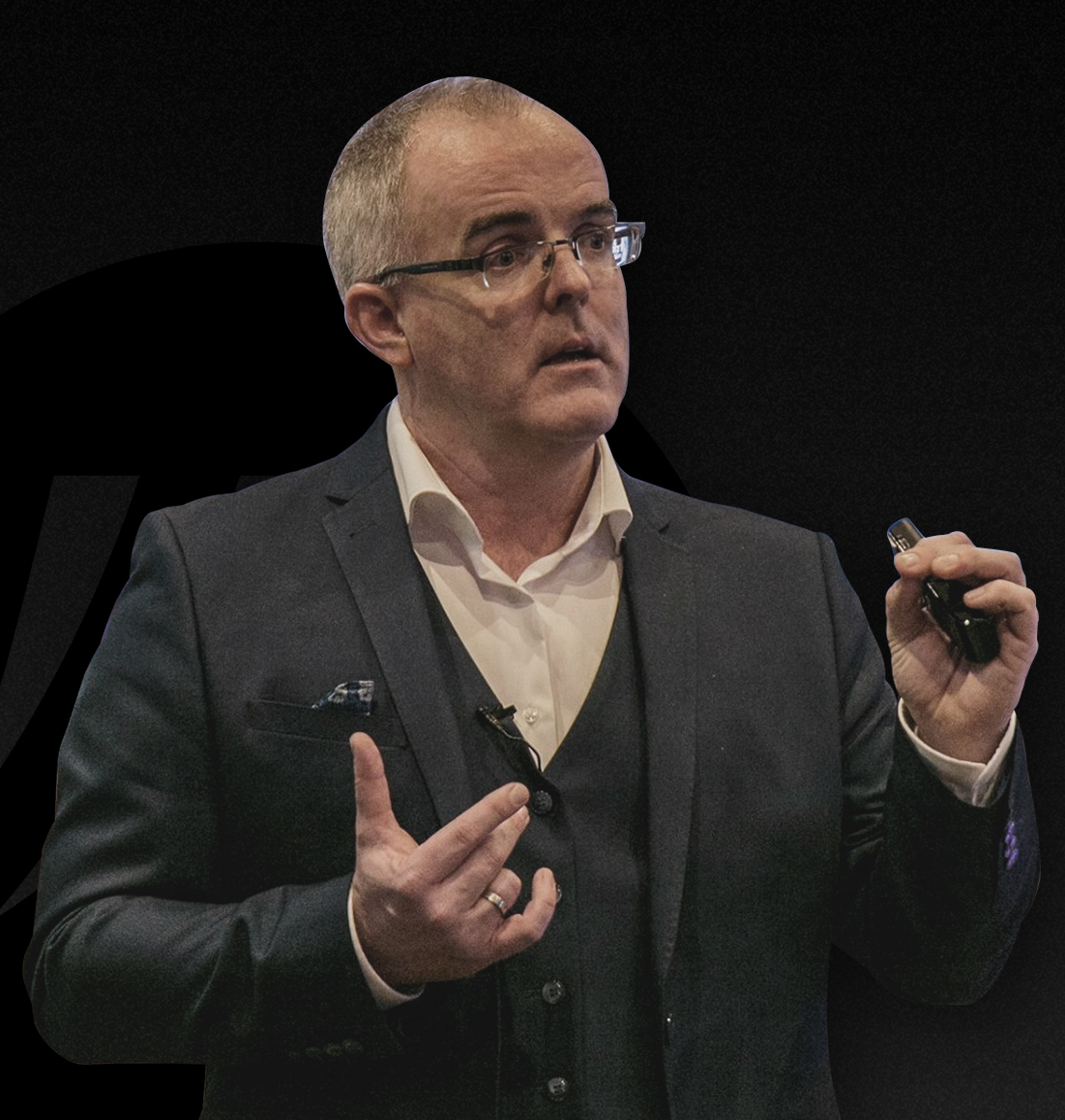
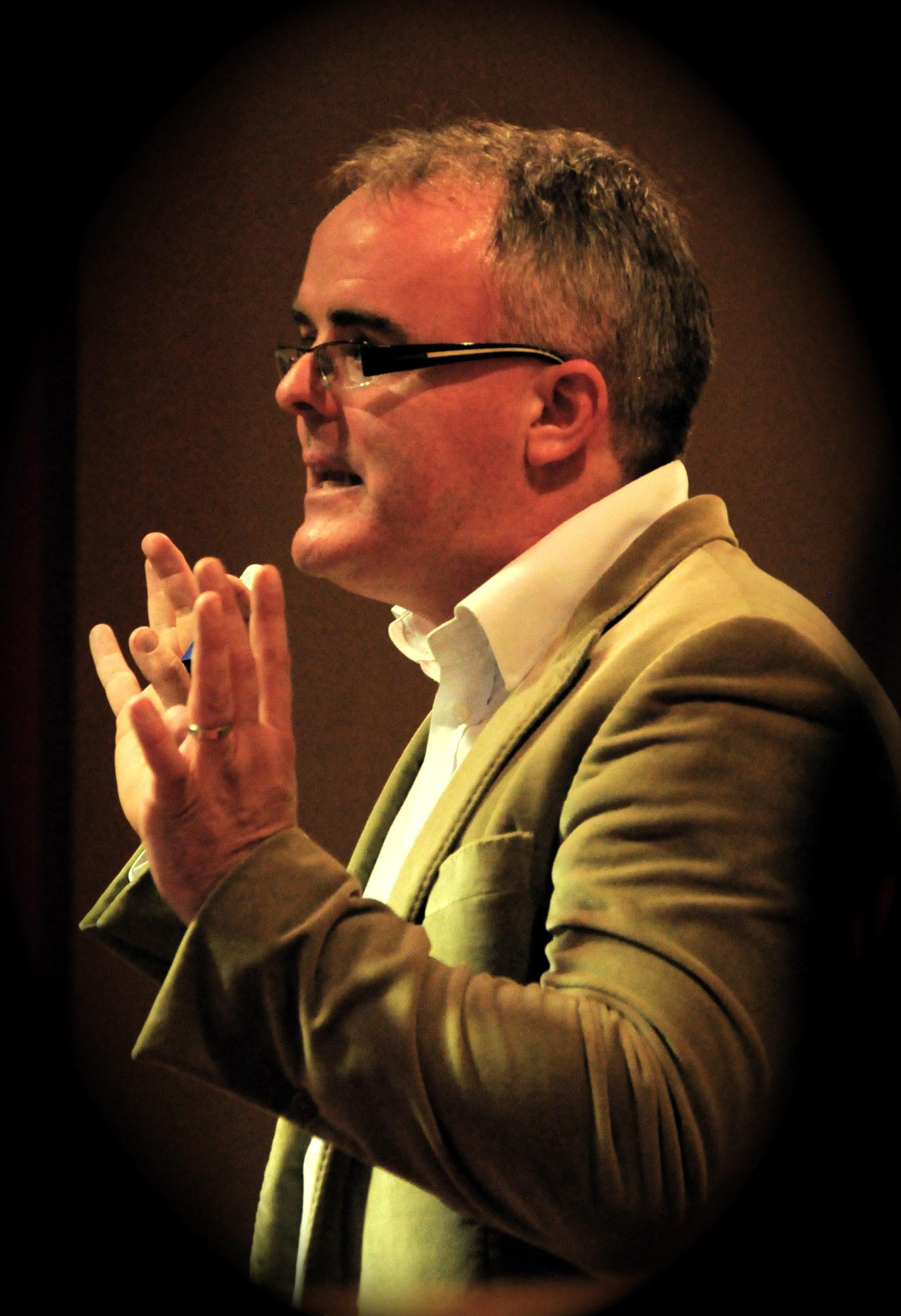
If businesses want to be successful in the future they need to stop thinking about customer relations and start building “friendships” with consumers, according to motivational speaker Kevin Kelly.
“The most important move that businesses can make is converting customers into friends
because all statistics show that customers leave, but friends don’t. I have built my business on that,” said Kelly. ‘‘How do you do that? How do you actually turn your customers into friends? The only way that you do that is to exceed customer expectations, or ‘exceptionalise’ your business”.
Last year’s IBM Global CEO Study of 1,500 business leaders found that 88 per cent of respondents described ‘‘getting close to the customer’’ as their key business strategy for the future.
‘‘In the current market, that is the type of relationship I think you need to develop. The concept of a customer is redundant in its current format – we are no
longer talking about customer relationships, but friendships,” Kelly said.
SFA conference Kelly’s interactive talk at the Small Firms Association’s annual conference, which is taking place in Dublin Castle at the end of the month, will focus on ways of “exceptionalising” your business to maximise returns.
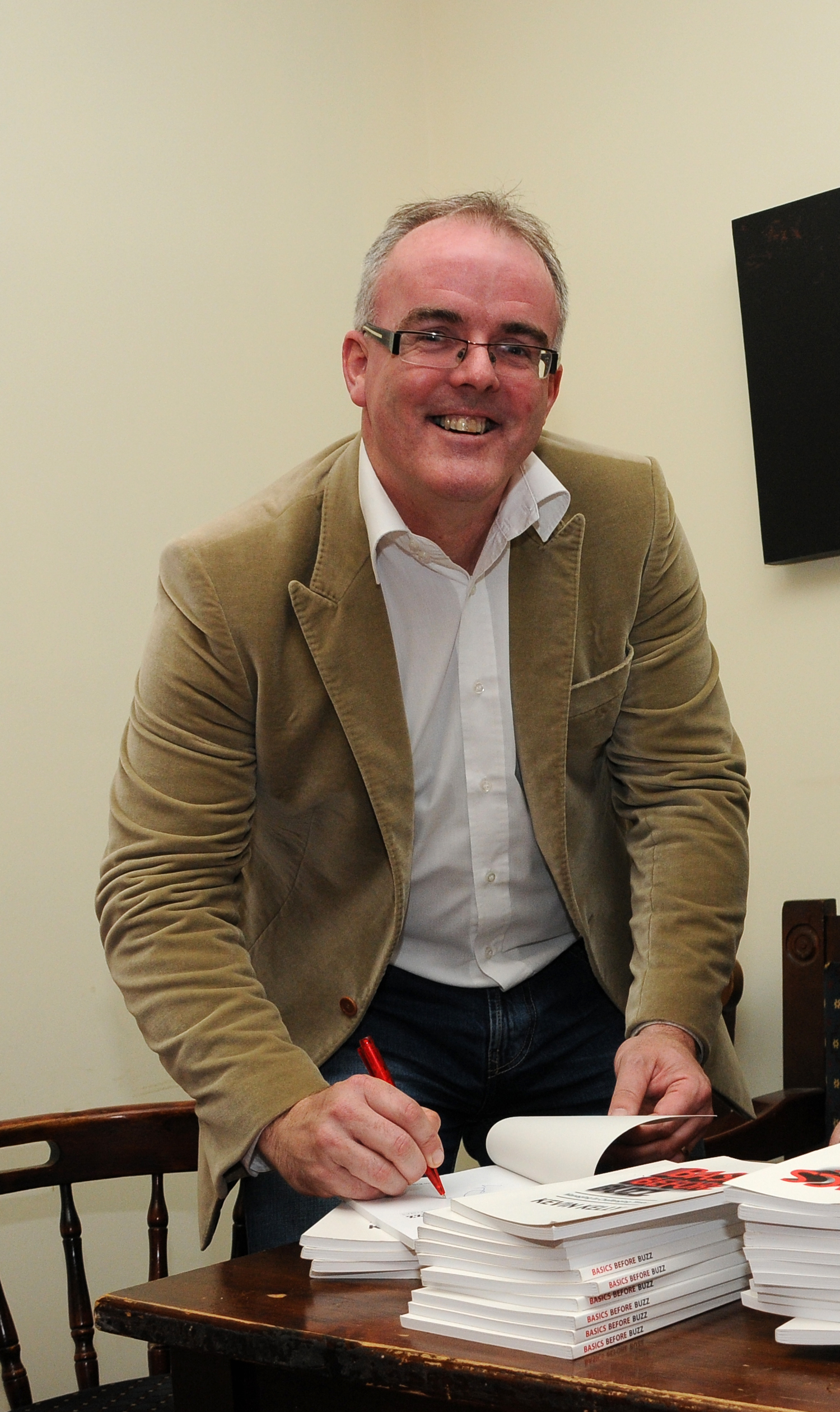
Having set himself the goal of developing an international presence when he started out 20 years ago, Kelly is one of the country’s foremost motivational speakers, keynoting at events across the world from the US to Korea. He has worked for Fortune 500 companies including Pfizer and Coca-Cola, and prestigious professional trade associations like the Million Dollar Round Table. He has written several books including Basics Before Buzz, Life: A Trip Towards Trust (available free as an e-book on his website, Kevinkellyunlimited.com) and the bestselling How? When you don’t know How. He has also produced several motivational CDs.
Exceptional business
Kelly developed the concept of exceptionalising businesses after the release of a 2006 study by Columbia University of successful US companies in the previous decade. It found that the vast majority of success stories came about as a result of the exceptional execution of an ordinary idea.
Only 12 per cent of those companies made their name with a new or innovative product. The rest took something already in existence and delivered
it to the market in a more efficient and attractive package.
“The skill of exceptionalising a business is to start by looking at all the different customer interfaces where the client meets the provider, then setting standards for each of those and aiming to exceed them on an ongoing basis,” said Kelly.
His approach is three pronged, focusing on companies’ people, processes and promoters. Promoters are crucial in the SME sector because they are generally the business owners themselves.
“He or she is the culture creator, and that culture is something which either stimulates involve mentor passion and excitement for the brand or not. You start with yourself. I love what I do, for example,” said Kelly.
“When I am trying to sell my message to whomever it is that I am working with on various different projects, it is fairly infectious because I am in that space where I love what I do.”
Communication
Improving how you communicate and interact with your customer is crucial. This, Kelly admitted, was particularly difficult at a time when many consumers were being bombarded with information from dawn to dusk.
“We are operating in an attention-deficit society. Most people are hit with 5,000 marketing messages a week,” said Kelly.
“A study done by the University of California found that people were interrupted every three minutes and 11 seconds, and they were hit with 100,000 words a day, so it is very difficult to get your message across.”
One area where small businesses can have a massive impact without spending a fortune is on the web. By optimising your website, so that it is one of the first things people find in a Google search, for instance, you can get your message out to the world more effectively.
“For SMEs with a minimal budget, you can have maximum impact if you are clever enough. Virrtual research teams [operate] through Google alert, blogs improving your optimisation and a world-class website all for minimal cost and you can tell the world what you are doing,” said Kelly.
“The conversation is no longer about getting business online – you should already be there. It is now about getting businesses optimised. We tend to forget that we have four million people in this country.
“We are not that big, but the fact is that, if you have talent, you can showcase your talent to the world now at minimal cost. It is down to passion, interest, being in the space you want, and then telling the world your message when have something to say.”
According to Kelly, another area in need of serious attention is customer service. It is the unique selling point of any business, but standards had dropped in Ireland in recent years, he said.
“We spend so much money trying to get the customer to our premises, and then we do a fantastic job of alienating them once they are there. There is a huge contradiction there, and people tend to forget it,” he said.
Economics of possibility
Kelly said we had dwelt too much on the negative in Ireland in the past three years – particularly in the media – and that we ought to reorientate ourselves instead to focus on the “economics of possibility”.
“That is the way forward. The biggest problem in Ireland today is lack of consumer confidence. Our conversations form our consciousness, so if all we are talking about is doom and gloom, what are expecting to happen here?” he said.
“It is miracle-work to expect consumer confidence to improve when all we are getting is negative information and another economist telling us that we are going down the tubes. What a revelation. I would prefer to see and focus on a good example of a company that is excelling in the present time and ask myself the question, ‘what have they done right, what can I learn from them?’” he said.
Selling Ireland
The Irish needed to rethink how we were selling ourselves to the world, Kelly said. The smart economy was a good idea, he said, but people in India and China could be smarter for less money and we needed to work on what really distinguished us abroad: our people.
“We are doing well at the moment, we are fighting back and that is good. However, if you ask anybody in any country around the world, ‘What is Ireland all about, what makes it different?’, they will consistently talk about Ireland’s people and how friendly we are, no matter where you are,’’ he said.
“We tend to be focused on the smart economy, but I actually think that the only unique selling point that we really have is our very, very friendly people. Then the question is; if that is our unique selling point, how do we sell it better?’”
Kelly said we should be putting Ireland’s friendly people to the fore and building the strategy around them by developing initiatives in areas like tourism, education and services, while also focusing on making it easier for visitors from the emerging markets to come here.
“As a location for teaching English as a foreign language, you couldn’t get a better place in the world. Thinking laterally, people come over here to kiss the Blarney Stone – why haven’t we developed a university for communication, for instance? We need to be much cleverer in our communications strategy,” he said.
“We should say ‘This is who we are’ and build everything around that model. We need to rethink Ireland Inc, and then to do what every other business does, build our model around our unique selling point.’’
(Journalist:Gareth Naughton)